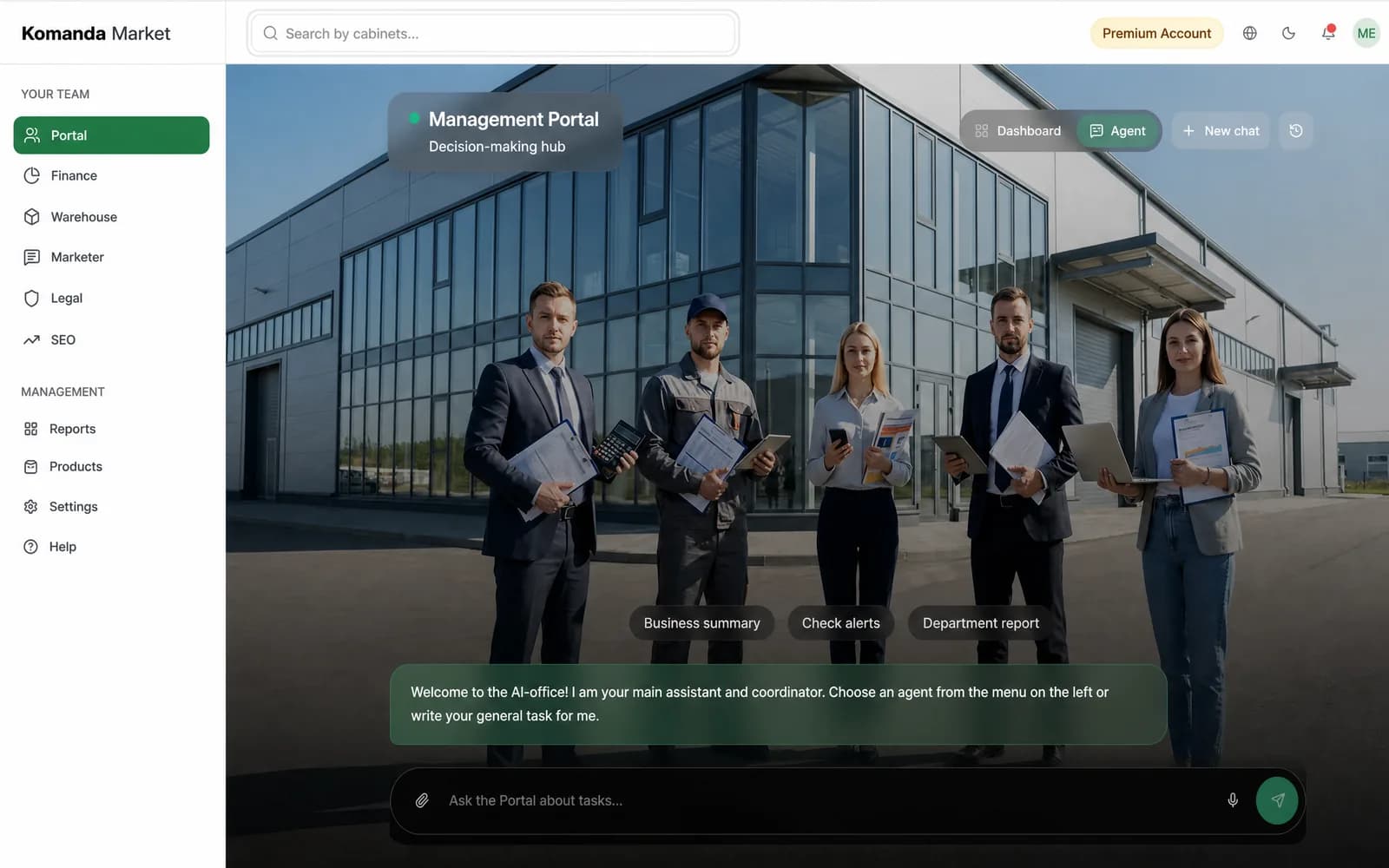
Komanda Market · Russia
Komanda Market — AI Employees for Marketplace Sellers
Five AI employees for Wildberries, Ozon and Yandex Market sellers.
Our platform · Russia
All casesA website security audit service: a site address becomes a report with a 0–100 score, an AI risk review, a PDF for management and a fix request in the CRM.
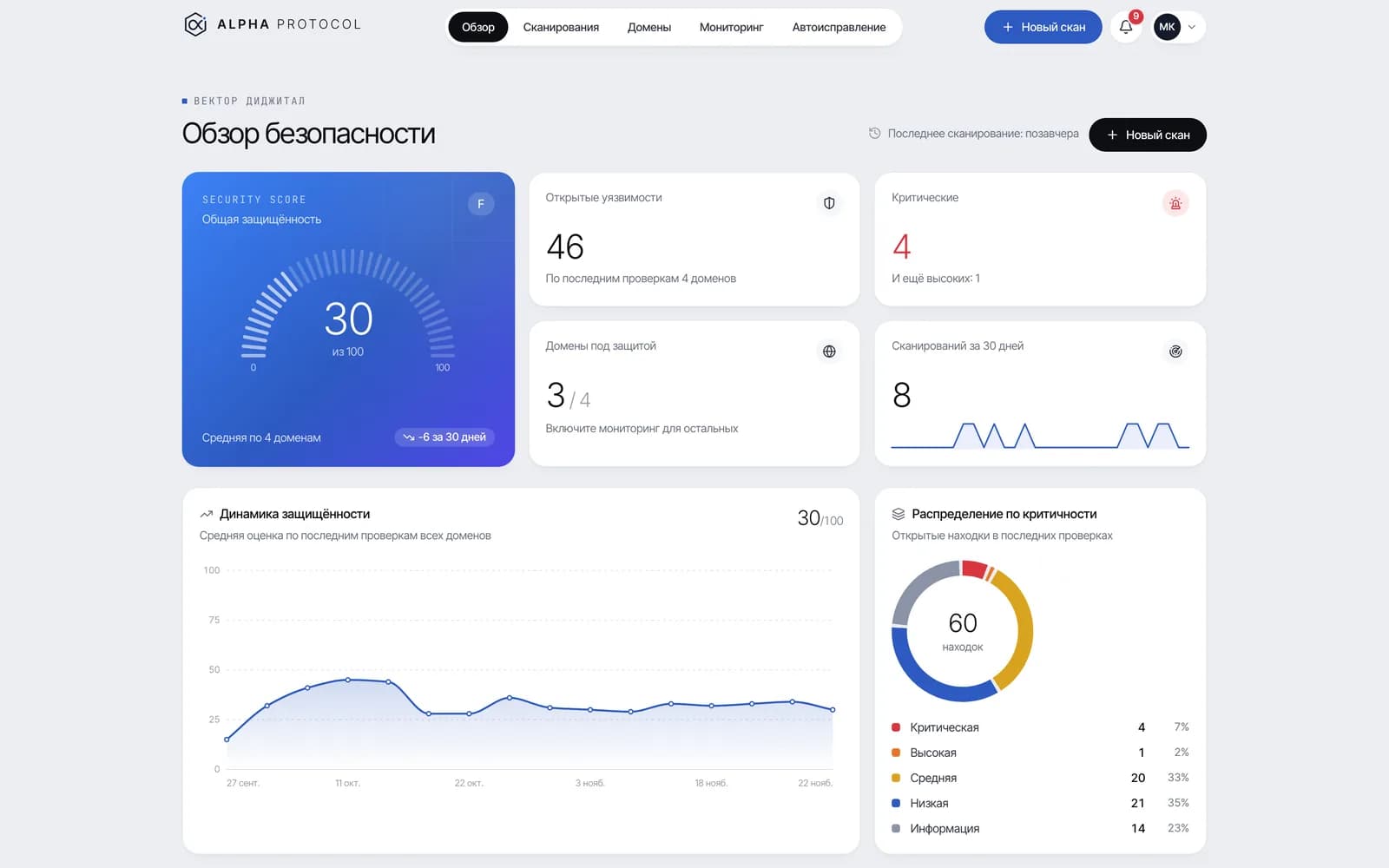
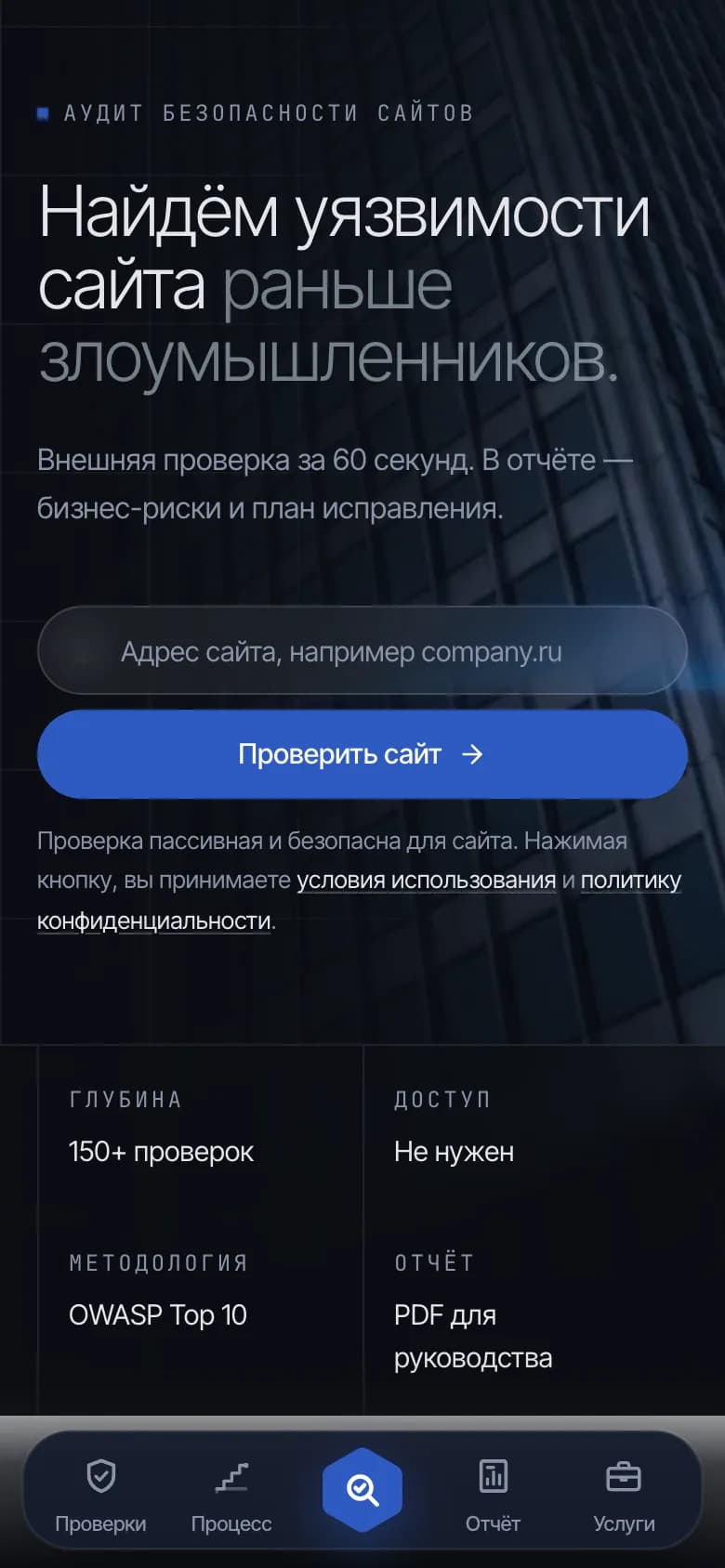
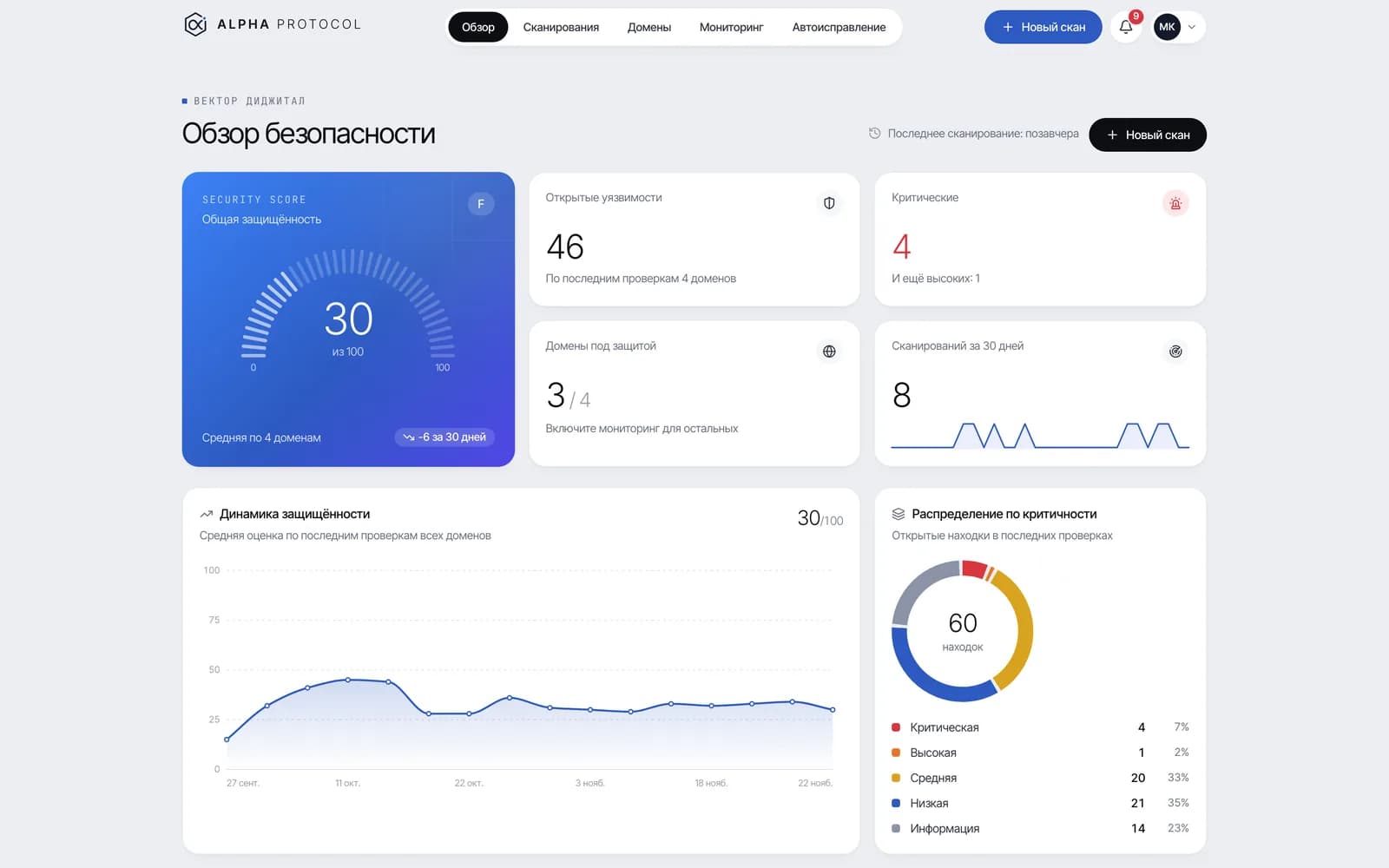
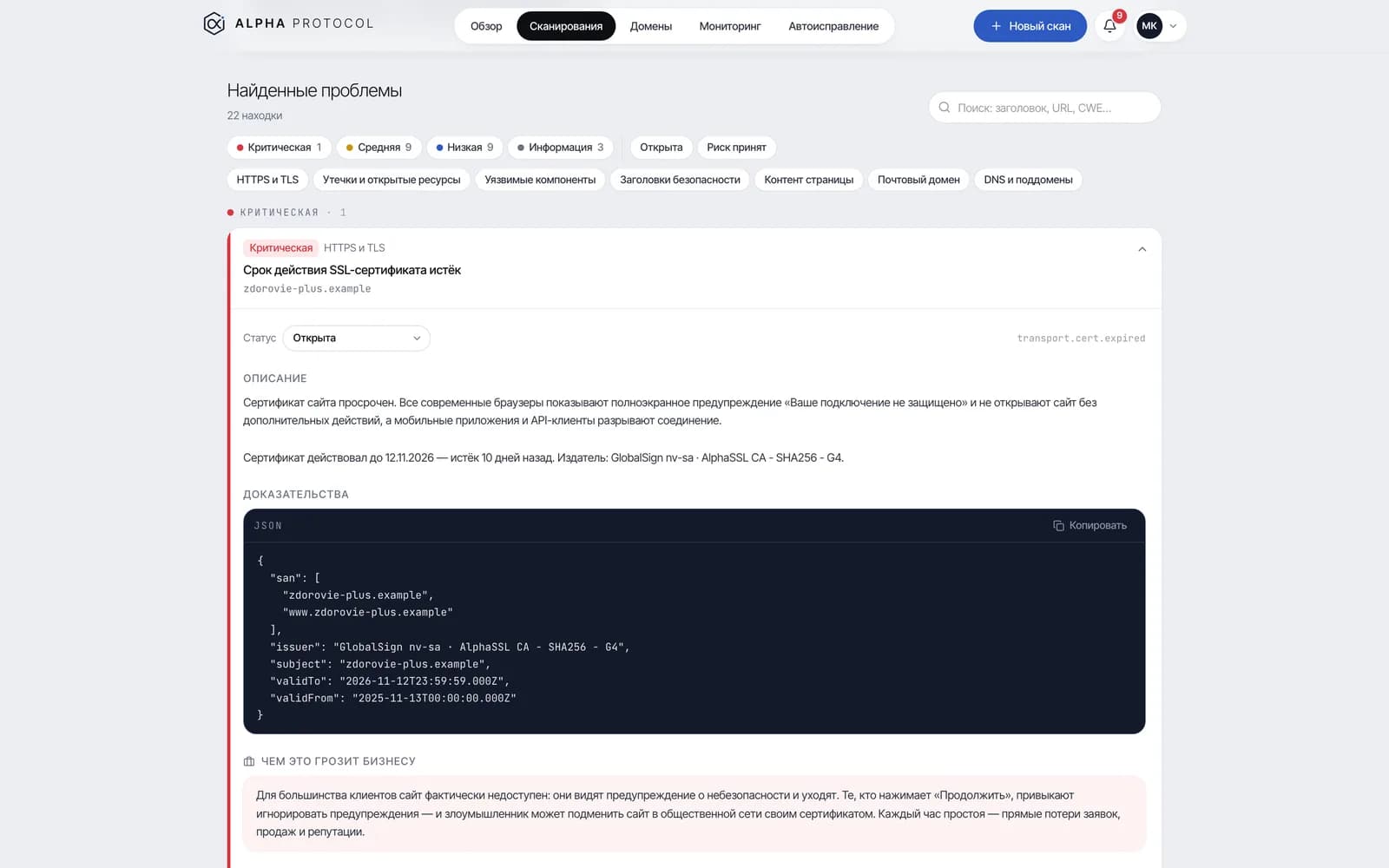
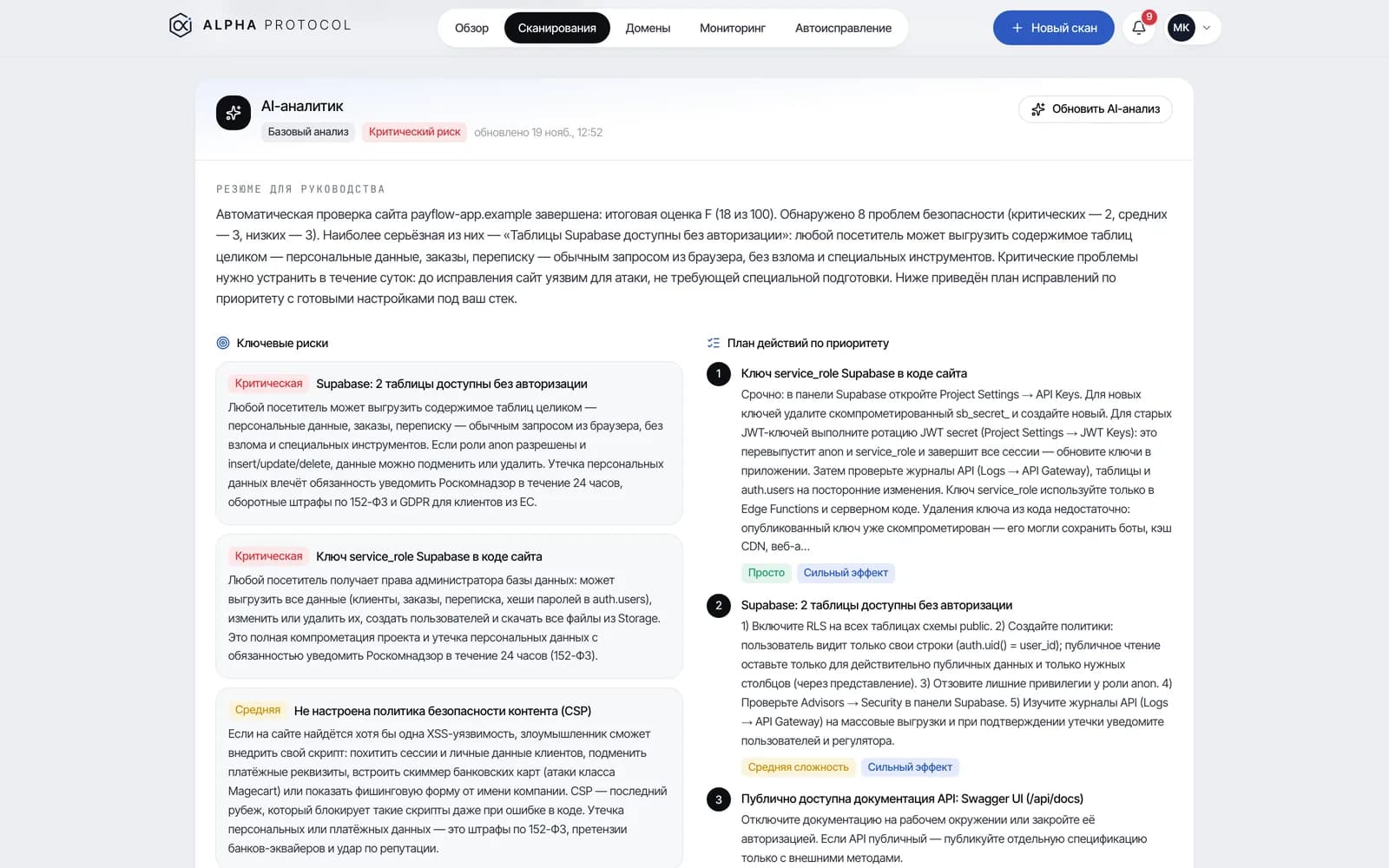
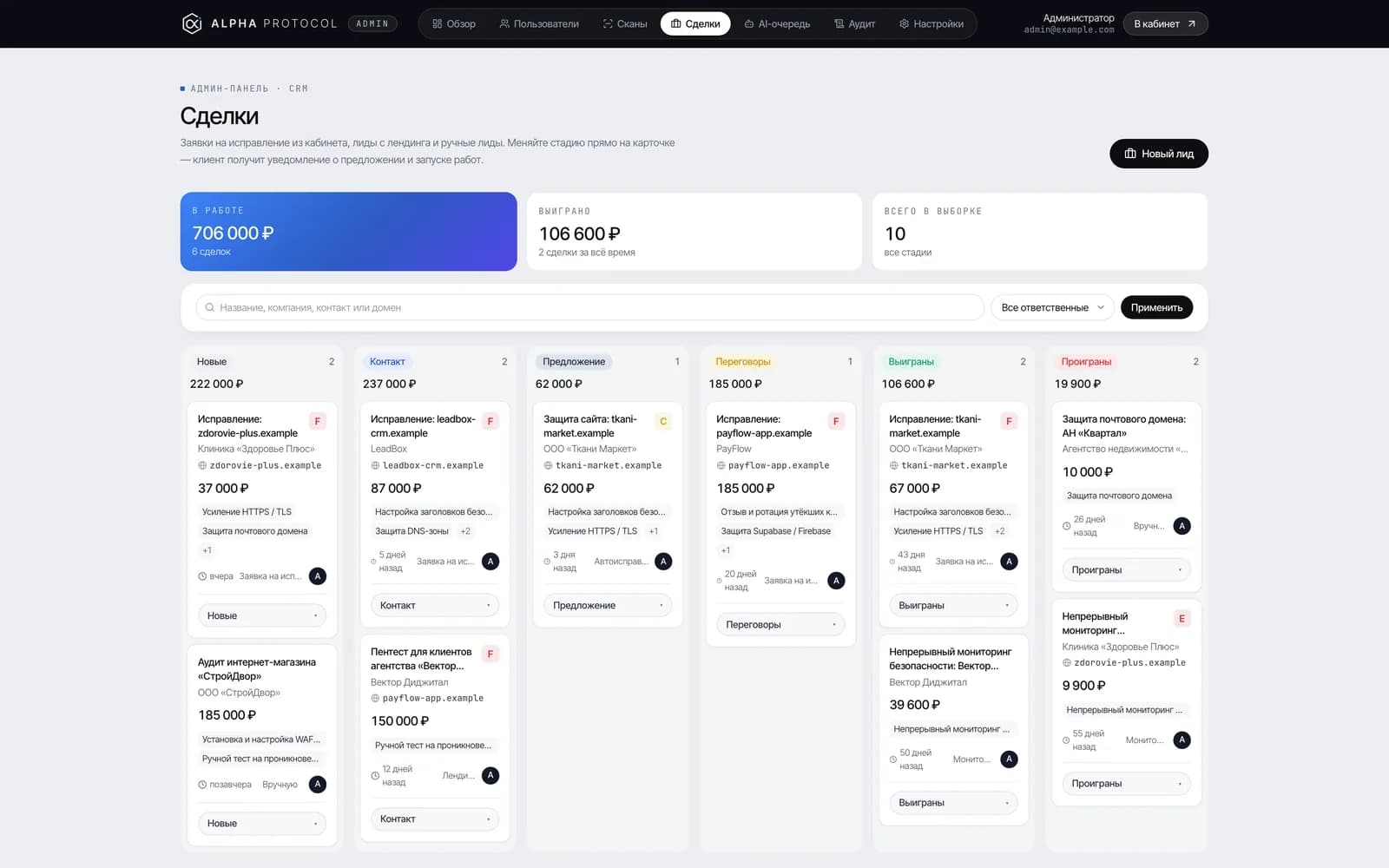
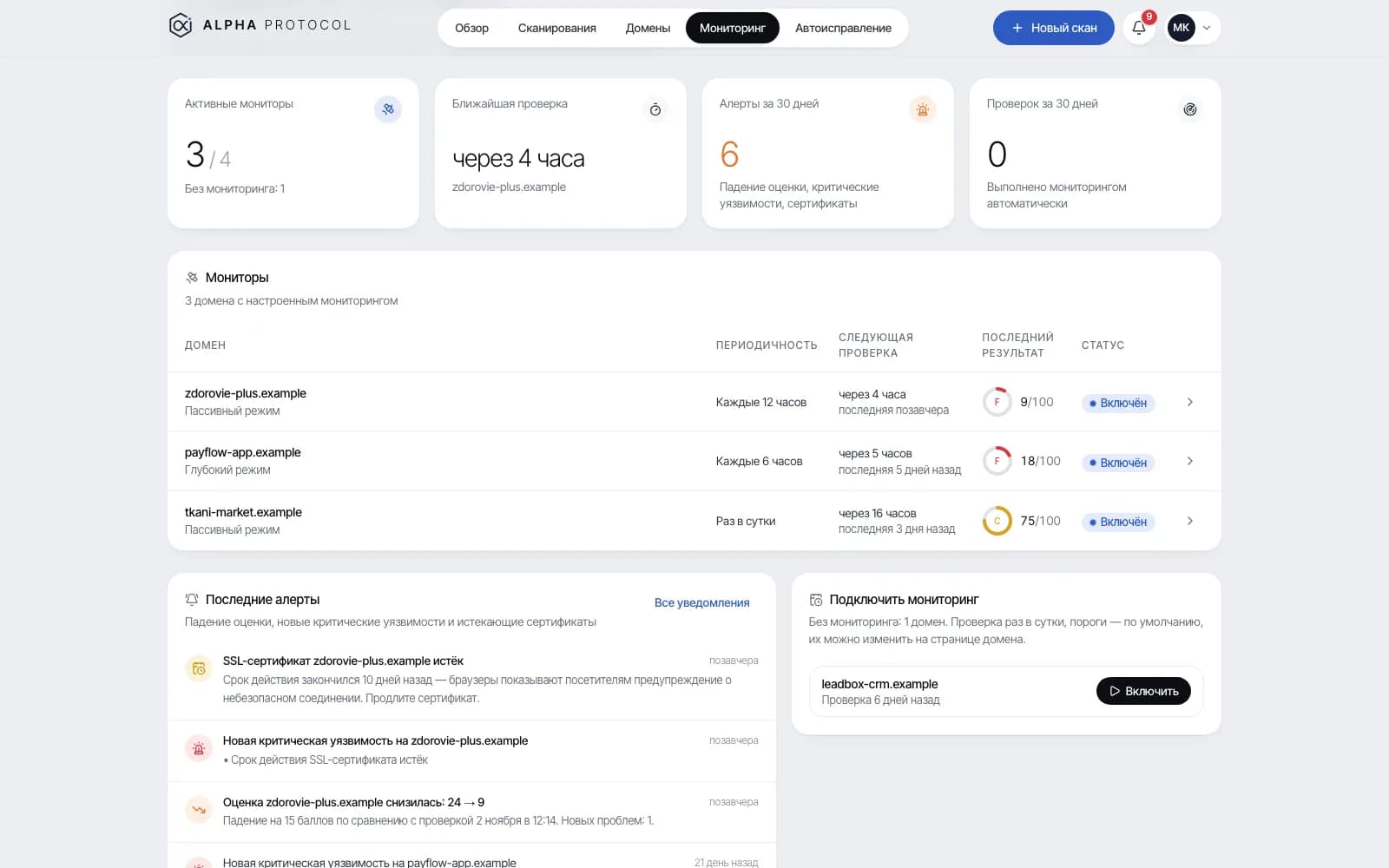
Next Robot built Alpha Protocol on Next.js 16, Prisma and PostgreSQL. A client enters a site address, and 16 passive modules check what is visible from outside: HTTPS and TLS, headers, cookies and CORS, technology versions with CVEs from OSV.dev, keys in code, Supabase and Firebase, service files, DNS, mail records, subdomains and WAF. Once domain ownership is verified, deep mode adds port checks and cloud database access rules. A 0–100 score and an A+ to F grade come from severity weights. The AI analyst on Gemini via Antigravity writes an executive summary, attack scenarios, a prioritized plan and a review of Russia's 152-FZ, GDPR and PCI DSS, and the report exports to PDF. The “Order a fix” button creates a CRM deal, auto-fix configures Cloudflare through its API, monitoring repeats checks on a schedule, and an MCP server opens the service to AI agents.
A client enters an address on the home page or in the cabinet, and the check starts at once. Before sign-up the client sees live progress and the issue count by severity; after sign-up the full report opens and links to the account.
16 modules check what is visible from outside: HTTPS and TLS, headers, cookies and CORS, technologies and versions with CVEs from OSV.dev, keys in code, cloud databases, service files, DNS, mail, subdomains and WAF. Each exposed file is confirmed by a content check, and every request goes through a client with SSRF and DNS rebinding protection.
After domain ownership is verified through a DNS TXT record, a file or a meta tag, the deep scan adds checks of 28 service ports and Supabase and Firebase access rules.
Findings roll up into a 0–100 score and an A+ to F grade. Each finding carries evidence, business risk and ready fixes for the site's stack, and most also cite CWE and OWASP. The AI analyst on Gemini writes an executive summary, attack scenarios, a prioritized plan and a review of 152-FZ, GDPR and PCI DSS requirements, and the report exports to PDF.
The client copies configs, requests an AI fix plan for their stack or runs auto-fix through Cloudflare. The “Order a fix” button creates a CRM deal with services and an amount. Monitoring repeats checks from every 6 hours to once a week and sends alerts to the cabinet and to webhooks.
Alpha Protocol is Next Robot's own website security audit service. A client enters an address, a 17-module scanner checks the site from outside, the cabinet shows a report with a 0–100 score, evidence and ready fixes, the AI analyst writes a summary for management, and the fix request goes to the CRM. The service suits site owners, agencies that run client sites, and teams that build sites on Supabase and Firebase. The interface is in Russian, at nextrobot.online/alphaprotocol.
The passive scan runs 16 modules and looks only at what is visible from outside: certificates and protocols, security headers, cookies, CORS, technology versions and known CVEs, 32 key patterns in HTML and JS, Supabase and Firebase settings, 65 service files, admin panels and API docs, error pages, DNS, SPF/DKIM/DMARC, subdomains and WAF. Deep mode adds port and access rule checks after ownership is verified. The score starts at 100: a critical finding takes 30 points, high 15, medium 6 and low 2, and each further finding of the same severity in a category weighs 60% of the previous one. Any critical finding caps the grade at D.
Next Robot built Alpha Protocol on Next.js 16, React 19, Prisma 7 and PostgreSQL with Tailwind CSS. The scanner takes CVEs from OSV.dev and subdomains from Certificate Transparency logs, and sends requests through its own client with SSRF protection. AI analysis runs on Gemini 4 Carbon through the Antigravity CLI: a worker takes jobs from the queue and returns structured JSON, and five Antigravity skills cover OWASP Top 10 2025 and ASVS audits, Supabase and Firebase security, remediation, report writing and operating the service through MCP. PDFs are built with @react-pdf/renderer. Auto-fix works through the Cloudflare API, the client's token is stored with AES-256-GCM encryption, and passwords are kept as argon2id hashes. The MCP server supports Streamable HTTP and stdio, and the REST API v1 authenticates with keys issued in the cabinet.
Next Robot builds SaaS services on the Alpha Protocol model: scanning and check engines, knowledge bases with ready fixes, AI analysis, PDF reports, CRM and MCP access for AI agents. Start with a free AI audit call. An engineer sends an estimate within 24 hours, and the next step is a fixed-price pilot with agreed KPIs. Next Robot signs an NDA on request.
Komanda Market · Russia
Five AI employees for Wildberries, Ozon and Yandex Market sellers.
Describe the task. An engineer replies within 24 hours with a plan and an estimate.