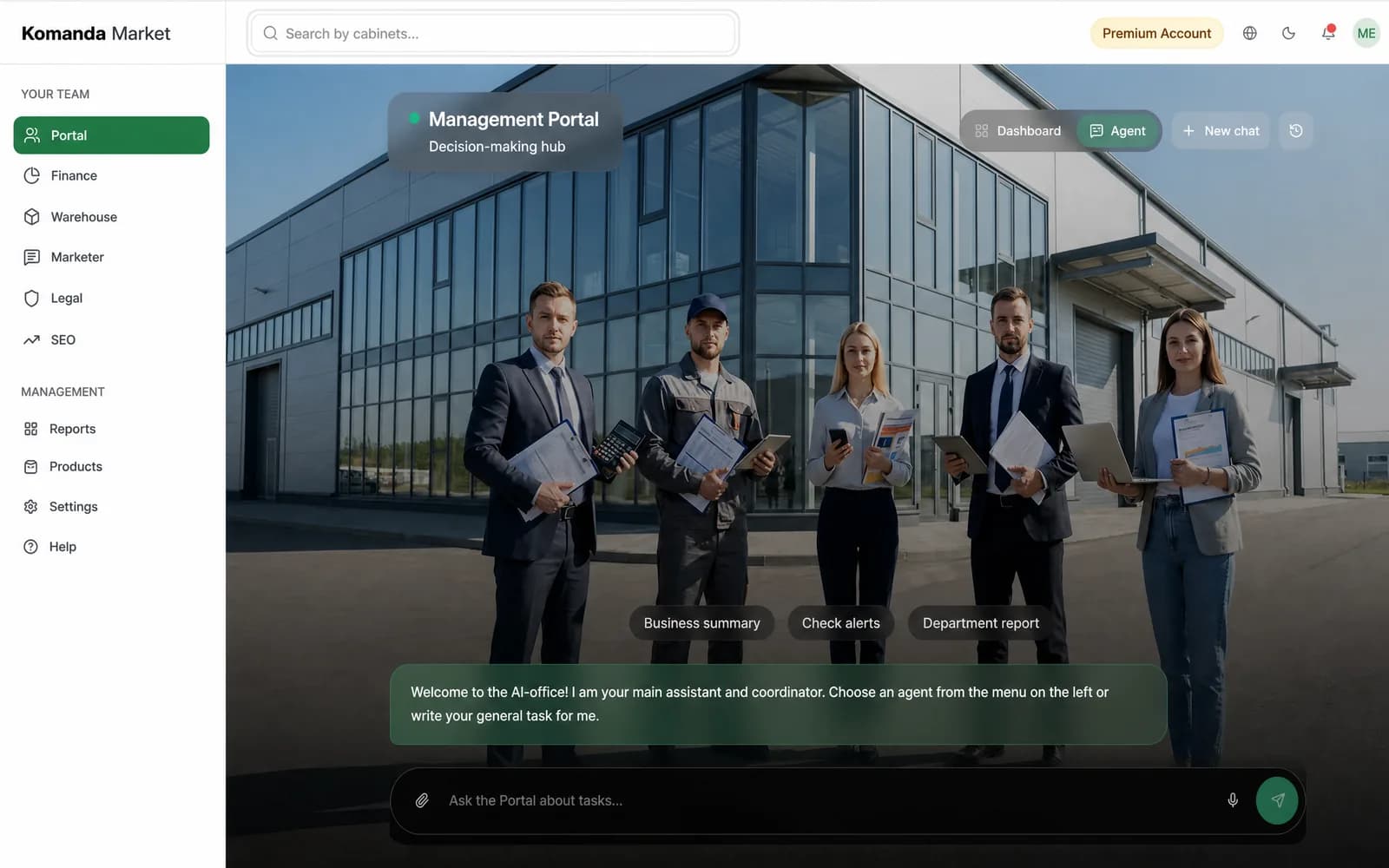
Komanda Market · Russia
Komanda Market — AI Employees for Marketplace Sellers
Five AI employees for Wildberries, Ozon and Yandex Market sellers.

Our platform · Thailand
All casesLED court auctions, bank collateral portfolios and factories in free economic zones in one private catalog, with a financial model for every lot.
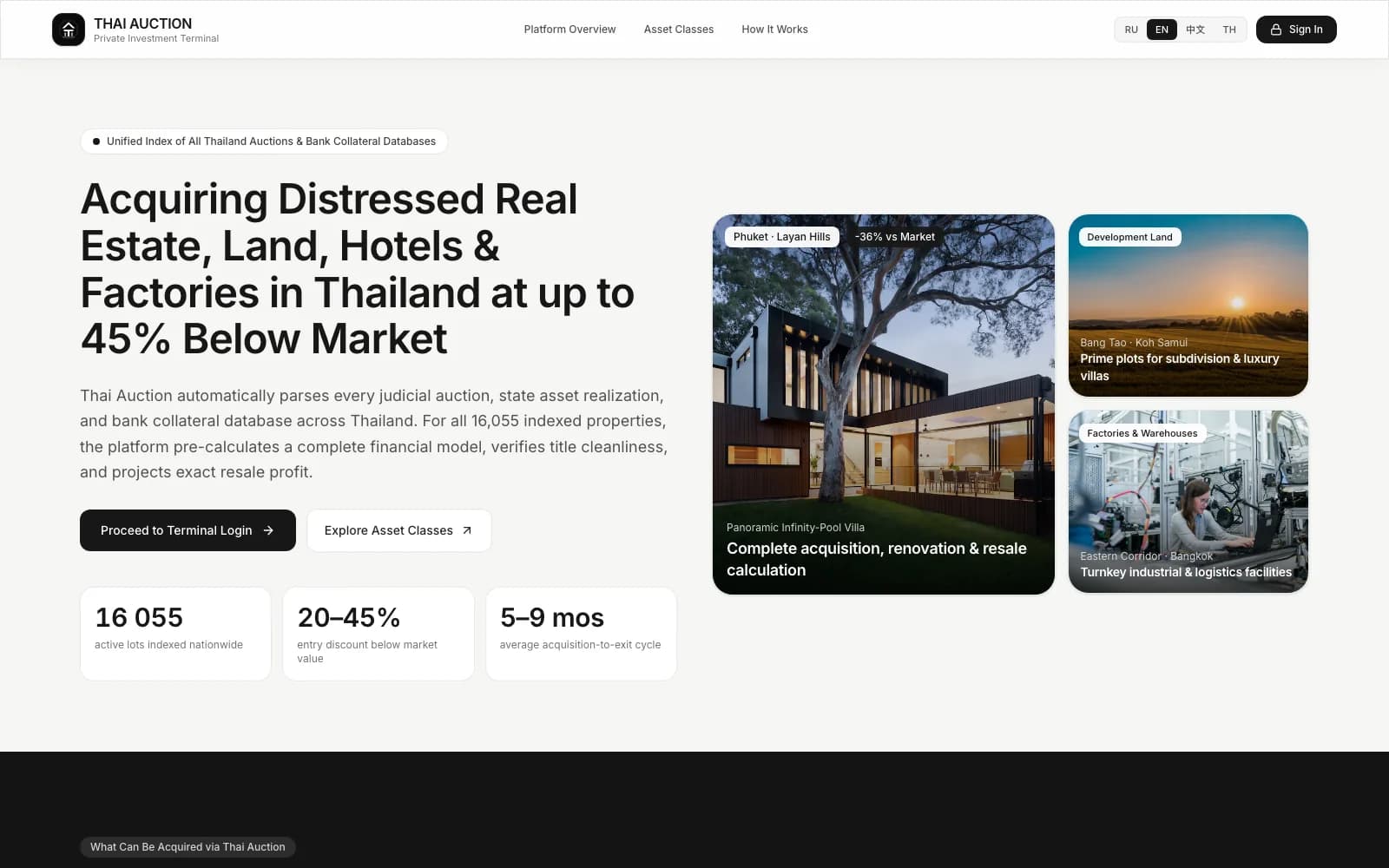
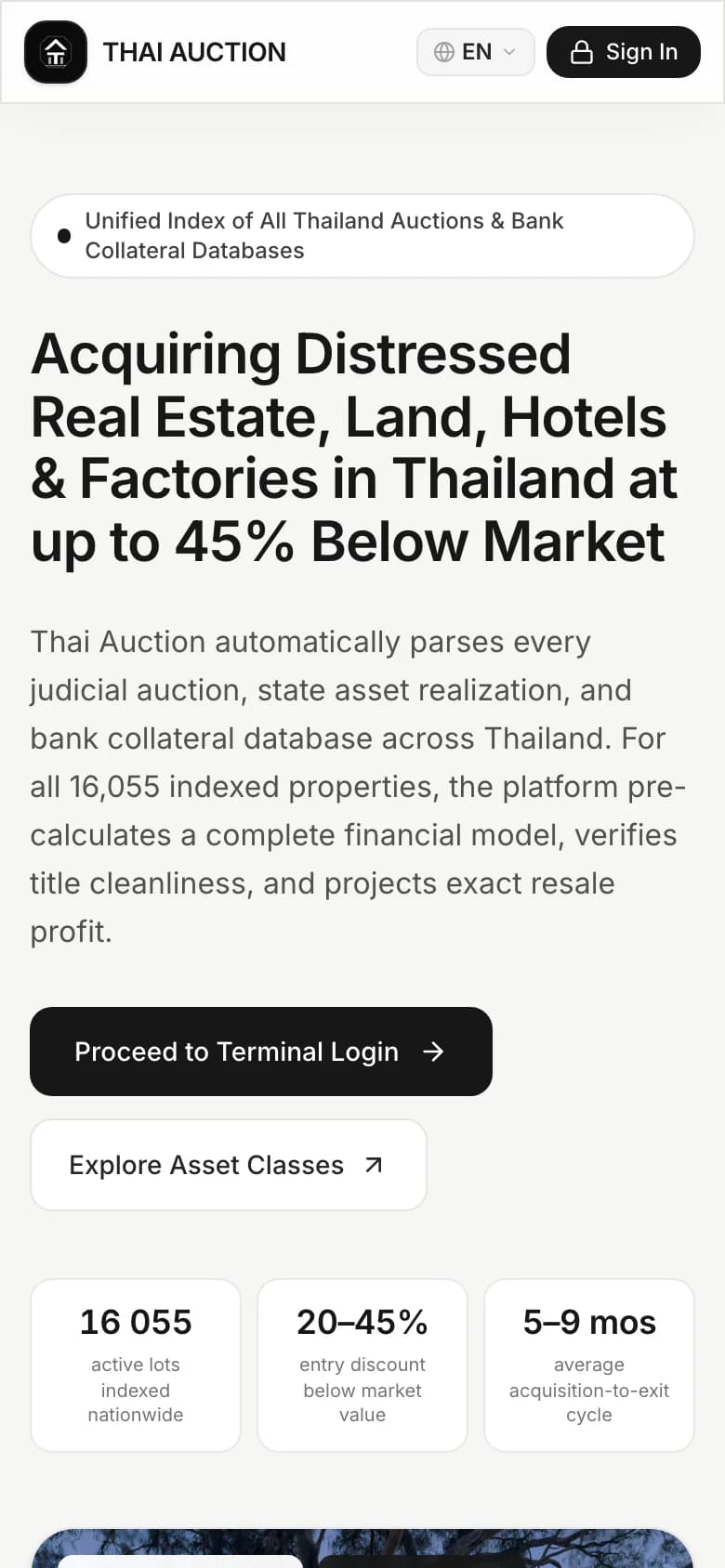
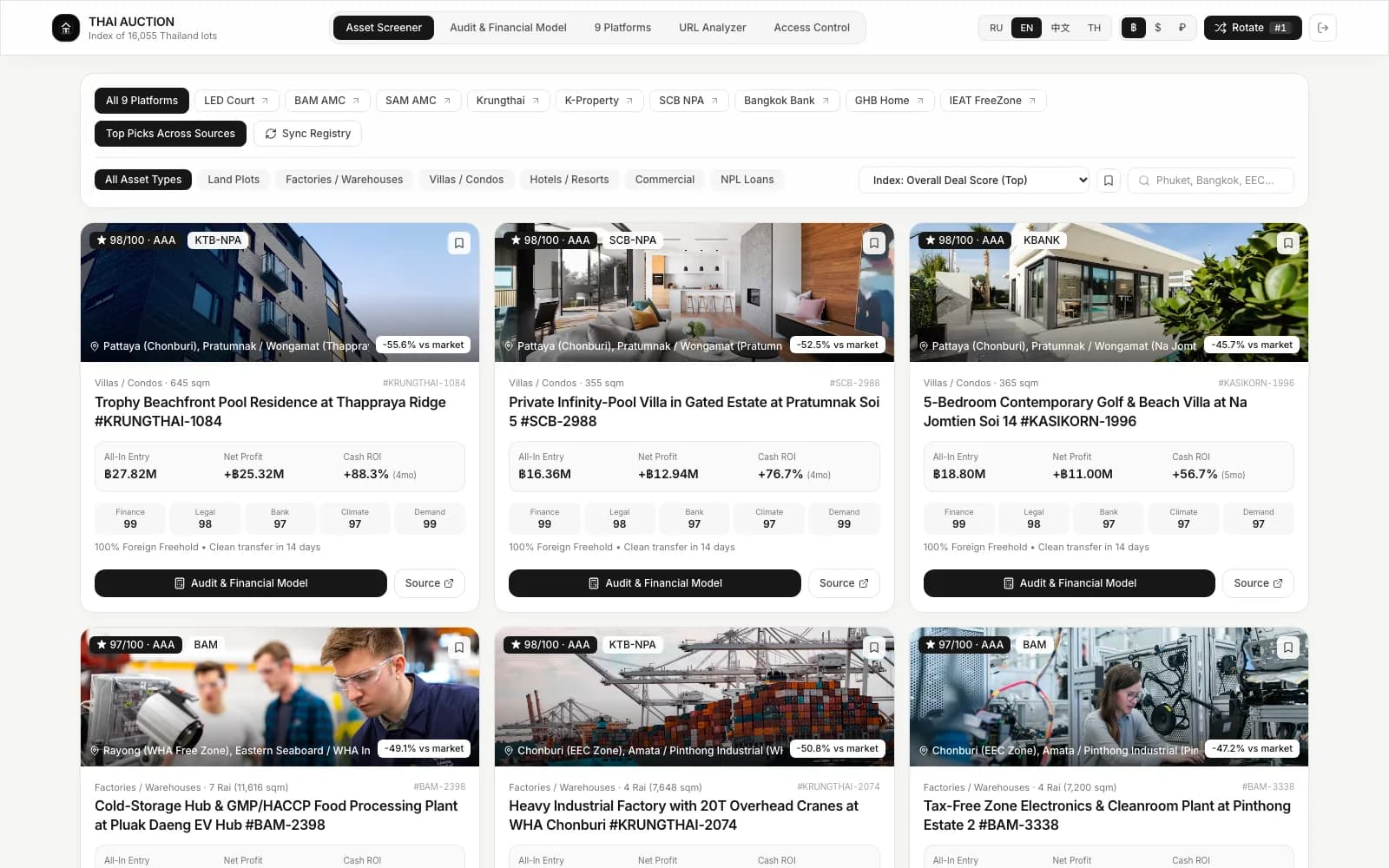
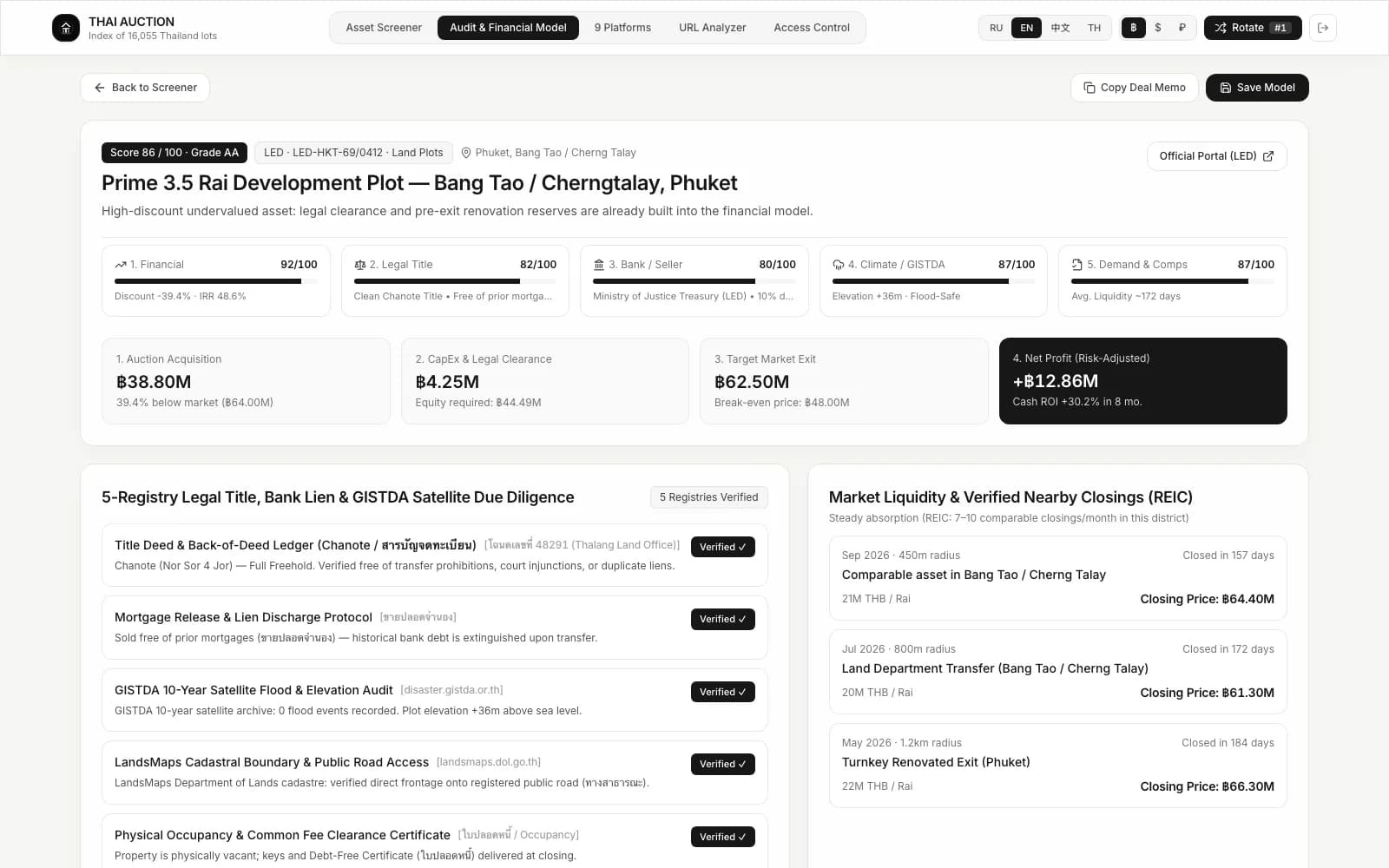
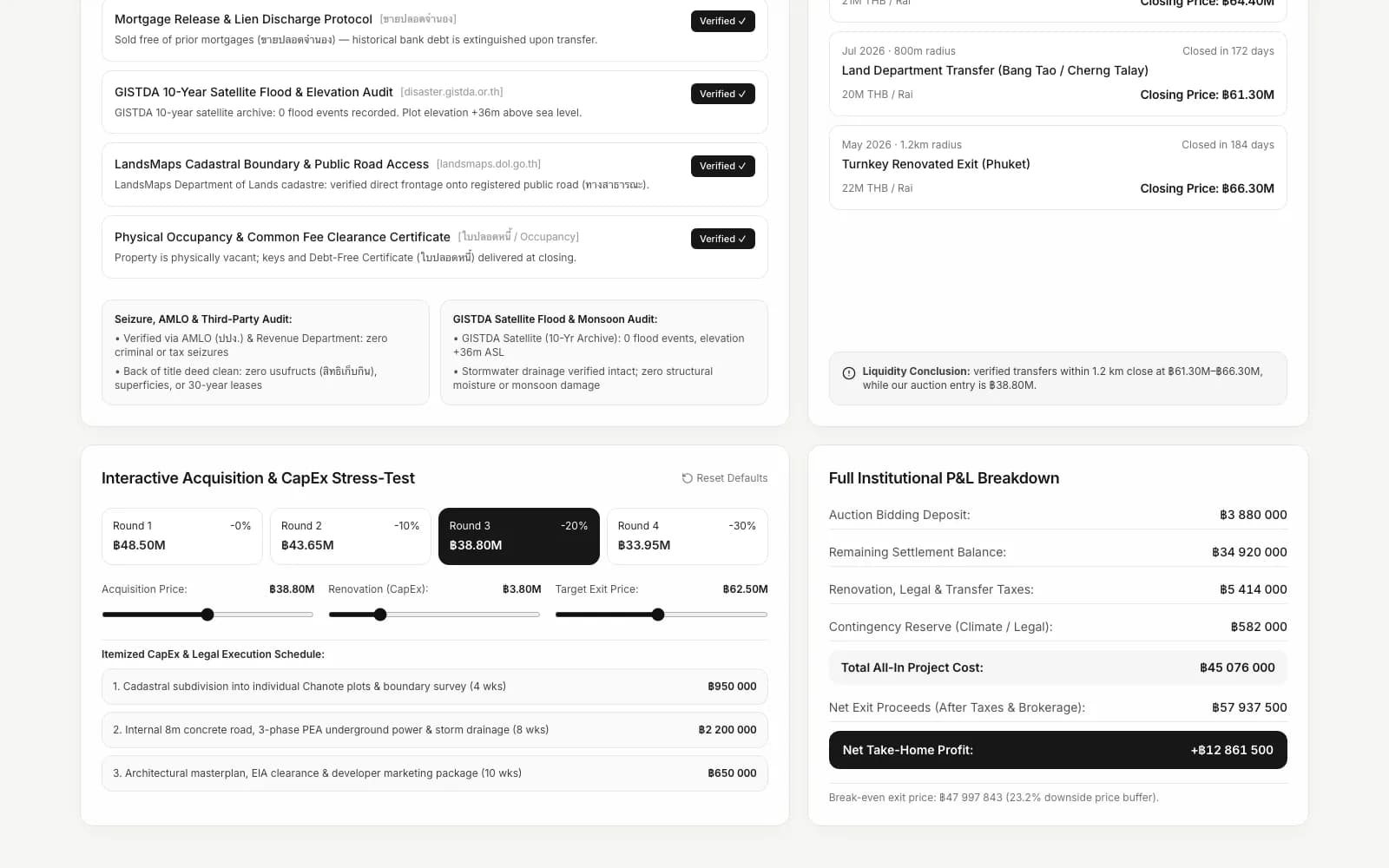
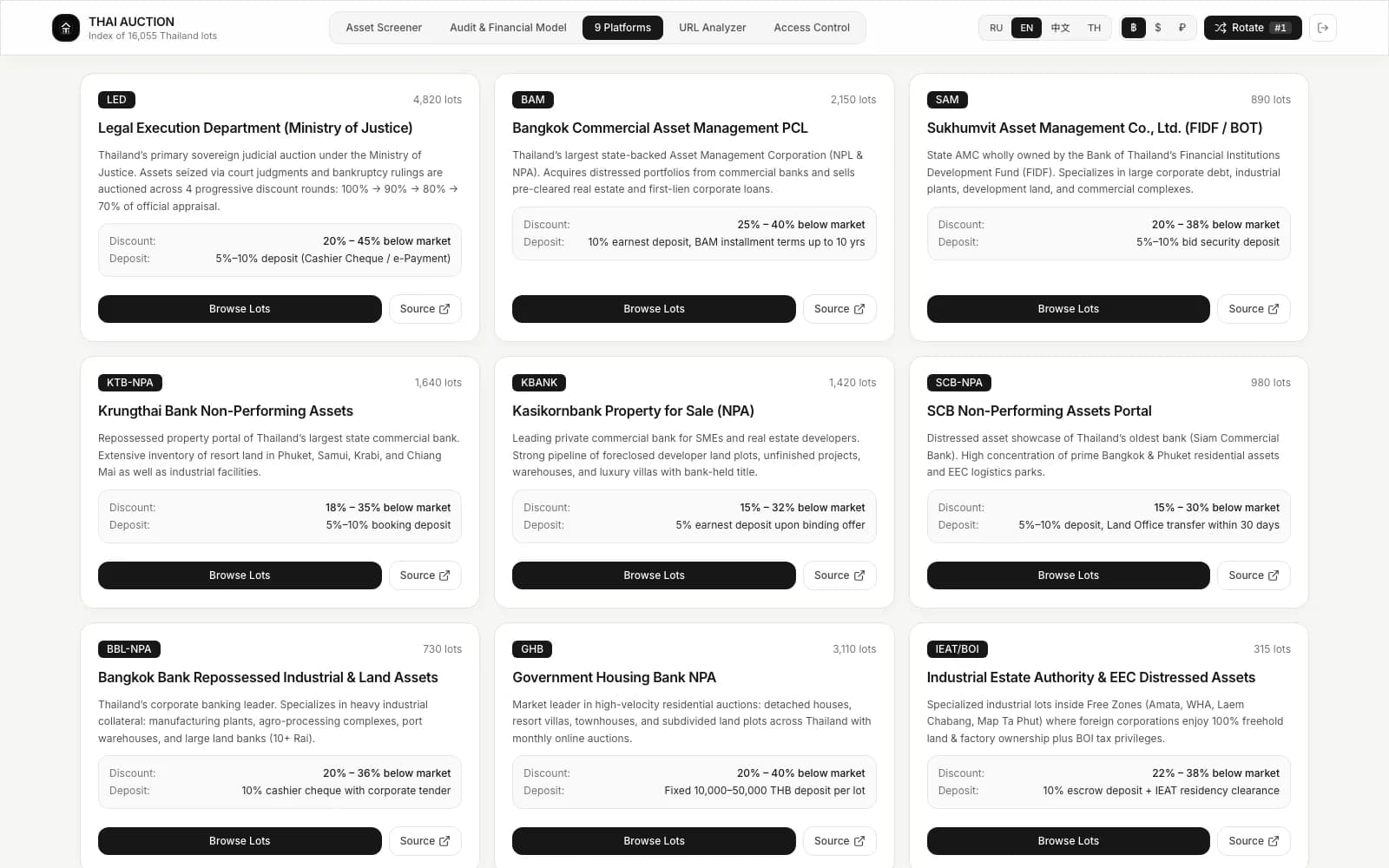
Next Robot built Thai Auction on Next.js as a private terminal in four languages. The catalog is built around 9 platforms, from the LED Legal Execution Department to Krungthai and SCB banks and IEAT industrial estates, and for each platform the terminal shows a description, the typical discount and the deposit rule. The parsing module imports a single lot from a link. For every lot the engine builds a financial model: buyout price by auction round, deposit and balance, transfer taxes, CAPEX, holding costs, leverage and net resale profit. Scoring combines financials, title cleanliness, the seller, flood risk and demand into a 0–100 score graded from AAA to B. In a stress test the investor moves the buyout price, CAPEX and exit price, then copies the deal memo in one click.
The catalog is built around 9 platforms: LED court auctions, the state asset managers BAM and SAM, the Krungthai, KBank, SCB, Bangkok Bank and GHB collateral portals and IEAT industrial estates. For each platform the terminal shows a description, the typical discount and the deposit rule. An analyst adds a single lot from a link, and the system reads the page title and description.
The engine takes the official appraisal and the auction round, then calculates the buyout price, deposit, the balance due within 15 days, transfer taxes, CAPEX, holding costs and loan interest. The output is the full budget, the equity needed, net profit, IRR and the break-even price.
Every lot gets a 0–100 score: financials and title cleanliness weigh 25% each, local demand 20%, the selling bank and flood risk 15% each. The score maps to a grade from AAA to B, and weak factors add a weather or legal-clearance reserve to the budget.
The investor filters lots by platform, asset class and region, sorts by the total score or any of the five factors and pages through sets of 9 assets. The Top Picks Across Sources mode mixes strong lots from different platforms.
In the lot card the investor picks an auction round, moves the buyout price, CAPEX and exit price and sees the full deal P&L update at once. The calculation is saved to the lot model, and the deal memo copies in one click.
Thai Auction is a private investment terminal built by Next Robot for buying distressed assets in Thailand: real estate and land from LED court auctions, collateral assets of banks and state asset managers, and factories in free economic zones. The terminal brings 9 platforms into one catalog and builds a financial model and a 0–100 score for every lot. The public page thai-auction.com runs in four languages, and the catalog and models open to members with personal access and owner, analyst or investor roles.
Thai Auction starts from the official appraisal and the chosen LED auction round: 100%, 90%, 80% or 70% of the appraisal. The model adds the deposit, the balance due within 15 days, a typical 2% transfer fee and 1% withholding tax, CAPEX and legal clearance, holding costs and interest when the deal uses leverage. On resale it applies the 3.3% specific business tax, half of the transfer fee and the broker's commission. The result is net profit, return on equity, IRR, the break-even price and the safety margin; the engine also runs conservative and optimistic exit scenarios.
Next Robot built Thai Auction on Next.js and React 19 with TypeScript and Tailwind CSS. The catalog covers 9 platforms: asset.led.go.th, BAM, SAM, Krungthai NPA, KBank K-Property, SCB Asset Home, Bangkok Bank, GHB ALL HOME and IEAT; the parsing module imports a lot from a link and reads the page with cheerio. The financial engine and the five-factor scoring are written in TypeScript, and the document checklist follows Thai practice: Chanote title deeds, the LandsMaps cadastre and GISTDA flood maps. The interface runs in Russian, English, Chinese and Thai, with prices in baht, dollars and rubles.
Next Robot builds investment terminals on the Thai Auction model: platform parsing, deal financial models, asset scoring and private cabinets with roles. Start with a free AI audit call. An engineer sends an estimate within 24 hours, and the next step is a fixed-price pilot with agreed KPIs. Next Robot signs an NDA on request.
Komanda Market · Russia
Five AI employees for Wildberries, Ozon and Yandex Market sellers.
Describe the task. An engineer replies within 24 hours with a plan and an estimate.